
Why won't my house sell after placing my home on the market? After weeks that turned to months, there were no viewings, no offers but only repeated dissappointments, There was silence from the Estate Agent. I started to wonder where I had gone wrong! .However, when weeks turn into months with few viewings, no o It is natural to feel frustrated and question what went wrong. Why won't my house sell?
While price is undoubtedly one of the most important factors in any property transaction, it is rarely the only reason why a home remains unsold. A property's presentation, layout, condition, marketing, buyer perception and even the way it is viewed can all influence whether a prospective purchaser decides to make an offer.
The good news is that many of these factors can be identified and addressed. By understanding the underlying reasons why a property is struggling to sell, homeowners can make informed decisions that improve its appeal, attract the right buyers and increase the likelihood of achieving a successful sale—often without immediately resorting to a substantial reduction in price.
In this article, we examine the most common reasons why properties remain on the market and explain the practical steps that can help overcome these obstacles.
Let me relate it to the experience of my ex-neighbour who put their house on the market:
My ex-neighbour, John wanted to downsize as he had just retired. For 6 months, he and tradesmen made various improvements to their property to improve the sale price – an improved luxury bathroom, a high-end kitchen, a new landscaped garden with a large patio with a barbecue area, etc. He spent between £50 to £75 thousand on this upgrade.
I want to use this experience to show whether these improvements can be recovered in a higher sale price.
He had priced the property above the “average” price on the street because of the improvements he had made.
He decided to show viewers the property, as he said that he knew the property best
He had focused on the interiors and had neglected the exteriors of the property.
My ex-neighbour, John placed the property on the market at the upper end of the price range for the street. There were viewers but there were no offers. The price was lowered until it was the average price for the street. The only person who made a serious offer was a retired builder. After a year, the new owner upgraded the whole house with more living space, replacing much of what the previous owner had done.
Comment:
Is My Asking Price Right? Will Buyers Pay For My Improvements?
One of the most common reasons a property remains unsold is that the seller believes every improvement made to the property should be fully reflected in the asking price.
While it is natural to expect a return on the money invested, buyers do not purchase a property based on what it cost the current owner. They decide what the property is worth to them, based on their own needs, lifestyle and budget.
An improvement only adds value if the buyer considers it to be valuable.
This distinction is often overlooked and can lead to unrealistic expectations when setting an asking price.
Buyers Do Not All Value The Same Features
Every buyer is different.
A growing family may be delighted by an additional bedroom, while a retired couple may see it as unnecessary space that they will rarely use.
Similarly, someone working from home may regard a garden office as an essential feature, whereas another buyer may prefer a larger garden instead.
The value of an improvement therefore depends as much on the buyer as it does on the property itself.
A well-designed loft conversion can be an excellent addition.
However, buyers may ask themselves:
If the answer to these questions is "no", they may place little additional value on the conversion.
A swimming pool often appears luxurious and expensive.
However, prospective buyers may instead think:
For many buyers, a swimming pool is viewed as an ongoing responsibility rather than an attractive feature.
Since home working has become more common, garden offices have increased in popularity.
However, not every buyer works from home.
Some buyers might prefer:
Again, the perceived value depends entirely on the buyer's circumstances.
A new kitchen generally improves marketability.
However, buyers may have different tastes regarding:
A £40,000 designer kitchen does not necessarily increase the property's value by £40,000.
A conservatory can provide valuable additional living space and may have been one of the most enjoyable improvements made by the current owner. It may have served as a family room, dining area, or a peaceful place to enjoy the garden throughout the year.
The cost can be from £20,000 upwards depending on size and specification.
Their answers to these questions will largely determine how much value they attach to the conservatory.
Solar panels are increasingly viewed positively, but they are not a universal selling point.
Solar panels can make a property more appealing, but they are unlikely to persuade someone to buy a house that is otherwise unsuitable.
Heat pumps are becoming more common as the UK moves towards lower-carbon heating, but buyers' opinions remain mixed.
For the right buyer, a heat pump is a significant benefit. For others, it may simply raise questions that need to be answered during the viewing.
A common mistake is to think:
"I've spent £80,000 improving the property, therefore the asking price should increase by £80,000."
Unfortunately, the housing market does not work that way.
The market determines value, not the owner's expenditure.
Some improvements recover much of their cost.
Others recover only a small proportion.
Some may simply make the property easier to sell without increasing its market value significantly.
Instead of asking:
"How much did these improvements cost?"
A seller should ask:
"Will my target buyer consider these improvements worth paying for?"
That single question often leads to a more realistic asking price and a better understanding of how buyers assess a property.
The Property Sale Optimisation Perspective:
Every improvement should be viewed through the eyes of a prospective purchaser. Features that have brought years of enjoyment to the current owner may be seen quite differently by someone viewing the property for the first time. Understanding this difference can help sellers set realistic expectations, present their home more effectively and avoid pricing themselves out of the market.
My ex-neighbour, John decided to show viewers the property as he said that he knew the property best.
He focused the viewing on the 2 newest improvements that he had carried out – the luxury bathroom and the improved kitchen. Rather than presenting the advantage of the nearby schools, he talked about the traffic at school opening and closing time. It was not about showing the viewer the house, but it was about his interest.
One of the most common questions asked by homeowners is whether they should personally show prospective buyers around their property or leave the viewing entirely to the estate agent.
There is no universal answer. The right choice depends on the property, the seller and the type of buyer.
The objective of every viewing is simple: to help the buyer imagine themselves living in the property. Whoever conducts the viewing should make that process as easy and comfortable as possible.
Estate agents conduct viewings every week and understand how buyers typically react.
An experienced agent can:
Because the estate agent has no emotional attachment to the property, buyers may also feel more comfortable discussing any concerns openly.
Not every estate agent is equally familiar with every property.
Some agents may:
• Rush the viewing.
• Be unfamiliar with recent improvements.
• Miss opportunities to explain unusual features.
• Be unable to answer technical questions.
This can be particularly important for properties with unique layouts or specialist features.
No one knows the property better than the owner.
The vendor can often explain details that an estate agent may not know, such as:
The owner's enthusiasm can sometimes help buyers appreciate features that might otherwise be overlooked.
However, there are also risks when the owner conducts the viewing.
Many homeowners unintentionally:
Buyers also tend to be less willing to discuss concerns while the owner is present.
In many cases, the best arrangement is a partnership.
The estate agent conducts the viewing professionally, while the vendor remains available to answer specific questions if required.
This allows buyers to view the property comfortably while still benefiting from the owner's detailed knowledge.
This is where your consultancy can introduce a distinctive perspective.
A viewing is not simply a walk through the house.
It is an opportunity to help the buyer understand how the property functions and why it suits a particular lifestyle.
For example, in a property with several extensions or an unusual layout, buyers can easily become disorientated.
Rather than simply opening doors from room to room, the viewing should explain the logic of the design:
"The original house ended here. This extension created a larger family kitchen, while the loft conversion provides a separate guest suite."
This simple explanation helps buyers understand the layout instead of trying to work it out for themselves.
A typical viewing lasts only 20–30 minutes.
During that short time, buyers are assessing far more than the bricks and mortar. They are deciding whether they can imagine living there.
If they become confused, distracted or uncomfortable, they may leave with uncertainty rather than enthusiasm.
The person conducting the viewing therefore plays an important role in creating a positive experience.
This is where your consultancy can differentiate itself.
Rather than asking only "Who should conduct the viewing?", ask a more important question:
"Who is best placed to present this particular property to this particular buyer?"
Some properties are ideally presented by an experienced estate agent.
Others benefit from the owner's detailed knowledge.
In some cases, a carefully planned combination of both produces the best outcome.
The goal is not simply to show every room. It is to ensure that buyers understand the property's strengths, appreciate its unique features and leave feeling confident that they have seen a home that meets their needs.
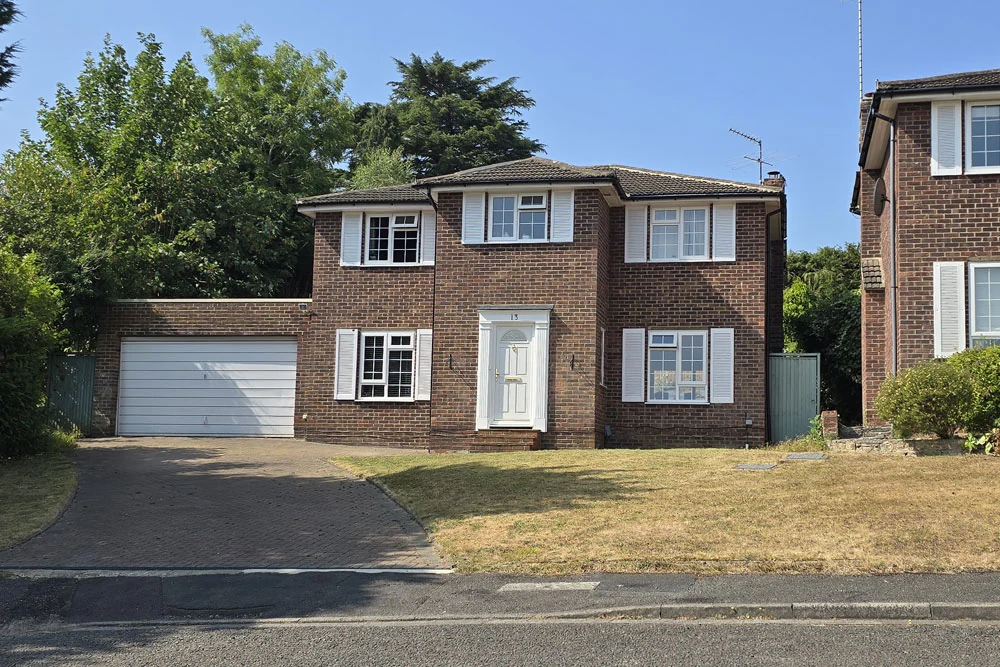
My ex-neighbour, John had concentrated on the interiors and had neglected to tidy up the front exterior of the property. The driveway had an unsightly crack and some dead plants.
A prospective buyer rarely arrives with a completely open mind. By the time they have parked outside, they have already seen the online photographs, compared your property with others, and formed certain expectations.
The first few moments of a viewing are critical. Buyers quickly begin to ask themselves questions such as:
• Does this property feel welcoming?
• Has it been well maintained?
• Can I imagine living here?
• Does it justify the asking price?
These impressions are often emotional rather than logical, yet they can strongly influence the remainder of the viewing.
The outside of the property provides the buyer with their first physical impression.
Simple issues such as an untidy front garden, peeling paintwork, overflowing bins or an unkempt driveway can unintentionally suggest that the property has not been well cared for.
Conversely, a clean, tidy and well-maintained exterior creates confidence before the front door has even been opened.
First impressions do not require expensive improvements. Attention to detail often makes the greatest difference.
The entrance hall acts as the transition between outside and inside.
A bright, uncluttered hallway allows buyers to relax and begin exploring the property. If the entrance feels cramped, dark or cluttered, buyers may subconsciously expect the remainder of the house to feel the same.
Lighting, cleanliness and a sense of space are often more important than expensive decoration.
The initial impression continues throughout the viewing.
Buyers naturally look for consistency. A beautifully presented living room followed by neglected bedrooms or bathrooms can create uncertainty and raise questions about the property's overall condition.
Each room should support the positive impression established at the beginning of the viewing.
Minor faults such as dripping taps, cracked glass, damaged door handles, peeling wallpaper or mould around windows may seem insignificant to the owner.
However, buyers frequently interpret visible defects as signs that larger, hidden problems may also exist.
The issue is rarely the cost of repair. It is the uncertainty these defects create.
Many homeowners believe they must undertake expensive renovations before selling.
In most cases this is unnecessary.
Buyers generally expect a lived-in home rather than a show house. What they do expect is a property that feels clean, cared for and well maintained.
Simple improvements often provide a greater return than costly alterations.
Although buyers analyse location, size, price and condition, the final decision is often influenced by emotion.
Successful viewings leave buyers thinking:
"I can imagine living here."
Unsuccessful viewings often end with a less tangible reaction:
"It just didn't feel right."
That feeling may be difficult to explain, but it can determine whether an offer is made.
A property has only one opportunity to make a first impression. Once a buyer has formed an opinion, it can be difficult to change it during the remainder of the viewing.
The aim is not to create perfection, but to create confidence. Buyers who feel comfortable, reassured and able to picture themselves living in the property are far more likely to take the next step.
If your property is not selling, don't assume that the asking price is the only problem. Most unsold homes are affected by a combination of factors, including presentation, layout, condition, marketing and buyer perception.
Before reducing the price, take the time to identify the underlying reasons why buyers are not making an offer. A fresh, objective assessment can often reveal opportunities to improve your property's appeal and increase the likelihood of a successful sale.
Top Takeaways